

This is an internal memo I posted on January 5, 2026. The context: step-function model improvements had just landed in November, and the industry was buzzing. Every CEO was suddenly pushing an “AI-first” agenda. Some leaders were threatening employees with performance management if they didn’t adopt AI. Others were giving speeches about AI driving critical results for the business.
I’ve never liked either approach. A rational understanding that AI is useful isn’t enough. There has to be a change of heart. And the best way to reach someone’s heart is to give them something to aspire to, something that matters to them personally.
So instead of talking about what AI means for the company, I wrote about what it means for each person’s career. AI is the biggest career accelerator any of us have seen. It’s an opportunity for personal growth, wealth creation, and building a future-proof skill set. As CEO, I felt I had a duty to explain to our team how we were empowering every Alchemist (what we call Lumos employees) to not only use AI, but use it to transform their own careers, and by extension, their lives.
Here’s the memo in its raw form. I hope it helps you think about how to communicate AI internally at your own company.
Memo: Agentic AI Internally at Lumos
Everyone talks about “AI-first companies.” I want to talk about AI-first careers.
Here is my bet: In 2026, 90% of you will be a manager.
It doesn’t matter if you are an SDR, a Designer, or a VP. You will manage a team of AI agents that do the heavy lifting. The most valuable people in the market won’t type faster or click more. They will orchestrate. They won’t do the raw work. They will become managers of infinite minds.
This isn’t just for engineering. Imagine a Customer Success Alchemist. In the old world, you spend hours clicking through Salesforce, Slack, Linear, Pylon, and Gong just to figure out who is unhappy. You drown in complexity. In the Agentic world, you wake up to a briefing. Your agent noticed that AppStore usage for “Acme Corp” dropped for six weeks straight. It flagged that five of their admins just authenticated into a competitor’s product. It listened to every Gong call to find the pattern. Then it drafted the save email, built the renewal deck, and listed three strategic ways to fix Acme’s specific pain.
You don’t hunt for problems anymore. You decide how to solve them. You stop being a pure executor and start being a strategist.
Lumos Is Your Training Ground
Of course, this shift is personal to us. Our mission is to help companies run a new workforce of humans and agents safely. We cannot build the platform for the Agentic future if we aren’t cutting-edge users of this technology ourselves.
But the more important message is this: Lumos must build this future for you. You cannot build a future-proof career if you stay stuck in the past. We want Lumos to be the place where you become the best version of yourself. The job where you learn the skills that define the next decade of your life. We are building the most capable, high-leverage workforce in the industry.
Decorating the Box vs. Breaking the Box
Becoming an Alchemist is a mindset shift. Most people spend their careers decorating their box. They get comfortable. They try to get a little faster at the manual tasks they have always done.
Alchemists don’t decorate the box. They break it. They push against the walls until the box cracks.
The tools you use today will be outdated in six months. The most successful people at Lumos won’t be the ones with the most tenure. They will be the ones who ask “Why am I doing this manually?” and then fix it.
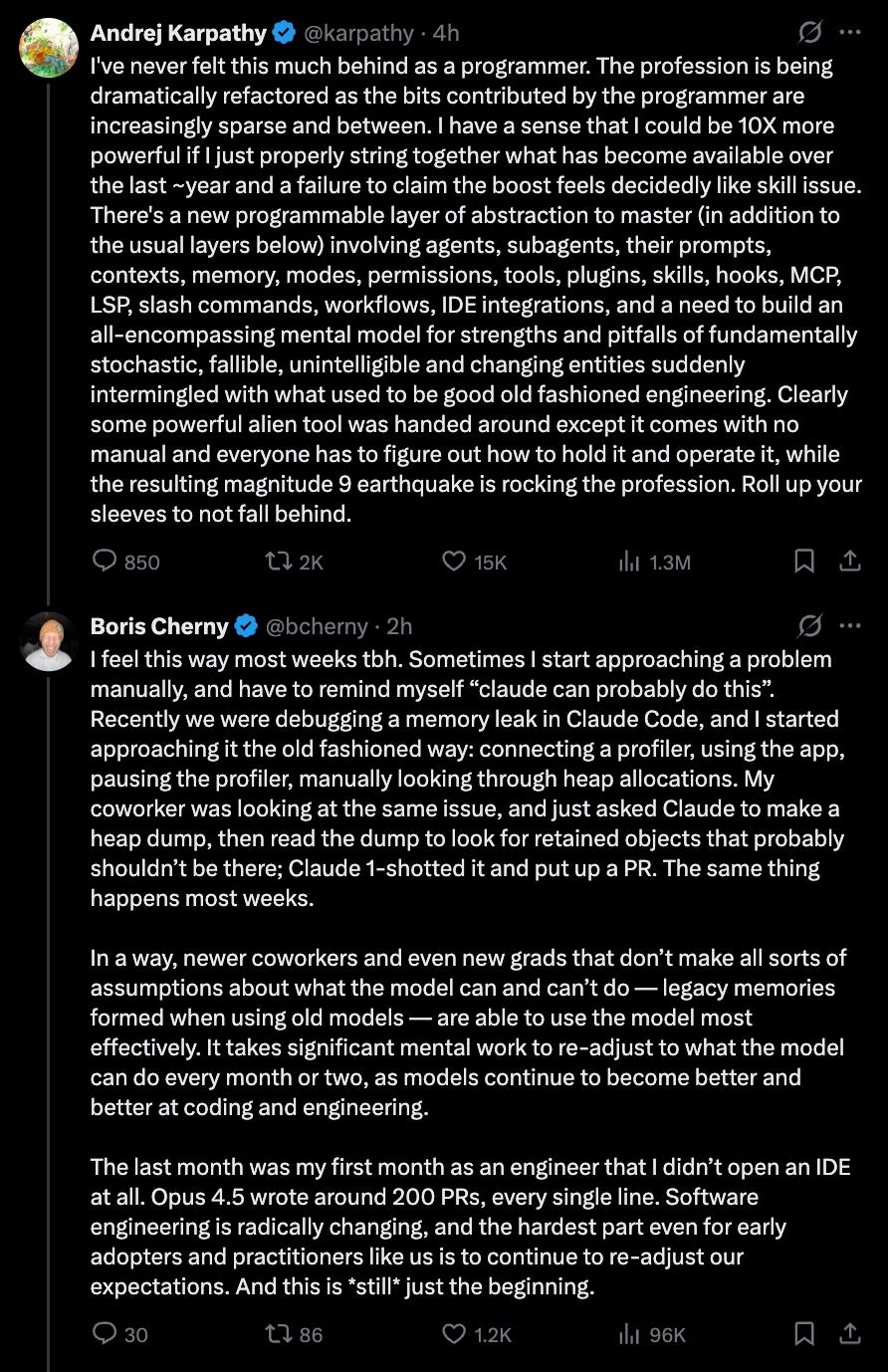
People often ask me: “Andrej, how do I find time to learn this on top of my work?” That is the wrong question. This isn’t extra work. We are asking you to work differently. Think about an elite athlete. They don’t just play the game. They go to the gym. They study the tape. That is what we need to do.
And we are already seeing Alchemists do it across Lumos:
Design: Karina T. didn’t just design a sidebar. She shipped it.
Ops: Elise used Replit to build an internal tool that automates deal reviews, saving the GTM team hours every week.
Support: Our Support team uses Cursor to diagnose issues instantly instead of manually digging through logs.
Sales: AK built prototypes of customer feedback to make customers feel truly heard.
Engineering: Zero built a prototype of a new AI product in a single day just to see what it would look like.
They didn’t wait for permission. They saw a way to break the box, and they took it.
Our Investment In You
If you lean into this, you won’t just help Lumos win. You will increase your own career potential by 3x. Becoming the “AI Professional” in your role, whether that is Marketing, Sales, or People, is the highest-ROI career move you can make right now.
But you shouldn’t have to do it alone. For you to succeed, the company must provide the rails, the budget, and the time. This memo is a commitment of investment in you. The next sections lay out the principles and the systems we are deploying to make this real.
The Principles
1. Continuous Reinvention Is the Job. The single most important skill at Lumos is no longer “Python experience” or “Enterprise Sales tenure.” It is the speed of your evolution. You won’t be a master of AI because AI changes every week. Instead, you must be a master of continuous improvement. If you are not climbing, you are sliding. We will evaluate effective AI use in performance reviews and hiring rubrics. If you are the person who reinvents a stale process, you are the person we want to reward.
2. AI Doesn’t Fix Mediocrity. Okay, this is the “tough love” portion of the memo. AI creates a dangerous illusion that foundational learning matters less. This is a trap. The best engineers with AI are almost always the best engineers without it. To truly leverage these tools, double down on the basics. Read blogs, reflect on your day-to-day, and sometimes build things the hard way to make sure you understand the why. If you stop learning, you become dependent. If you keep learning, you become unstoppable.
3. Prototype with Agents. In a GSD (”Get Shit Done”) culture, the first phase is the Prototype. Never start with a blank page. Whether you are building a slide deck, designing a marketing funnel, or sketching a product feature, use agents to generate the first draft. They create information for you to edit. You can produce a prototype that teammates can react to in a fraction of the time. Don’t write the code from scratch. Orchestrate the agent to build the skeleton, then apply your judgment.
4. If You Do It Weekly, Automate It. Look at your calendar. What do you do once a week or once a month like clockwork? If you do it semi-frequently, an agent should do it for you. We don’t want you spending brainpower on repetition. We want you spending it on strategy. Engineers investigating the same class of bugs? CSMs spending hours building QBR decks? Sales reps researching prospect financials? Automate it.
5. Shared Wisdom, Centralized Tools. Learning is self-directed, but it shouldn’t be lonely. The tool landscape is confusing. While we encourage you to experiment with everything, we will curate a central “Golden Path:” a set of approved platforms for coding, writing, and analysis. We will have DRIs (Directly Responsible Individuals) to guide you and Office Hours to unblock you. We expect you to share what you learn. If you find a killer prompt, post it in #general_working_with_ai. If you build a great workflow, demo it.
6. Mastery over Novelty. We invest in “Iron Man suits” that make you faster. But we avoid Hype-Driven Development. Chasing every new model on Twitter kills momentum. We focus on a Golden Path of our core AI stack (Claude Code, ChatGPT, Gong, Clay, etc.). The real leverage comes from mastering the classics. We value someone who extracts 100% from our core stack over someone who has tried ten tools but mastered none. Tool Expertise, not Tool Selection.
7. Grit over Gloom. Learning to prompt well is an unobvious skill. It is normal to feel frustrated when an agent gives you a hallucination or bad code. Don’t give up. The first prompt is rarely the right one. Loading context takes practice. Debugging an agent is a new muscle. Find the “AI Alchemist” on your team and shadow them. Create study groups. We will shout out the failures just as much as the wins because that is how we learn. This shouldn’t induce angst. It should feel like unlocking a superpower.
The Systems
Principles are the mindset. Systems are the mechanics. We have over ten systems at Lumos that operationalize all of this. Here are the five most interesting ones, the ones I think could actually change things at your company, too.
The AI Council. A group of internal leaders who meet to orchestrate our AI strategy, find the hidden gems across the company, and remove blockers.
The “Sharpen the Axe” Block. We explicitly protect monthly time for Tooling Maintenance. Use this block to refine your setup, organize your prompt library, or debug your local environment. Do not push feature work during this time. We invest hours now to save days later.
The “Automate Yourself” Hackathon. Once a quarter, we pause BAU for one day. The goal: build a workflow that automates the most boring 20% of your personal job. You don’t build for the company. You build for your own sanity.
Head of AI Ops. We have a dedicated person who owns AI operations and leads all of this. One person to 3-4x over 100 people. That’s a good investment.
The New Hiring Rubric. We are changing how we interview with pragmatic AI questions and case studies. For example, an engineer will have a coding interview where they have to use AI, and we watch how they work in that environment.
What I Hope You Take from This
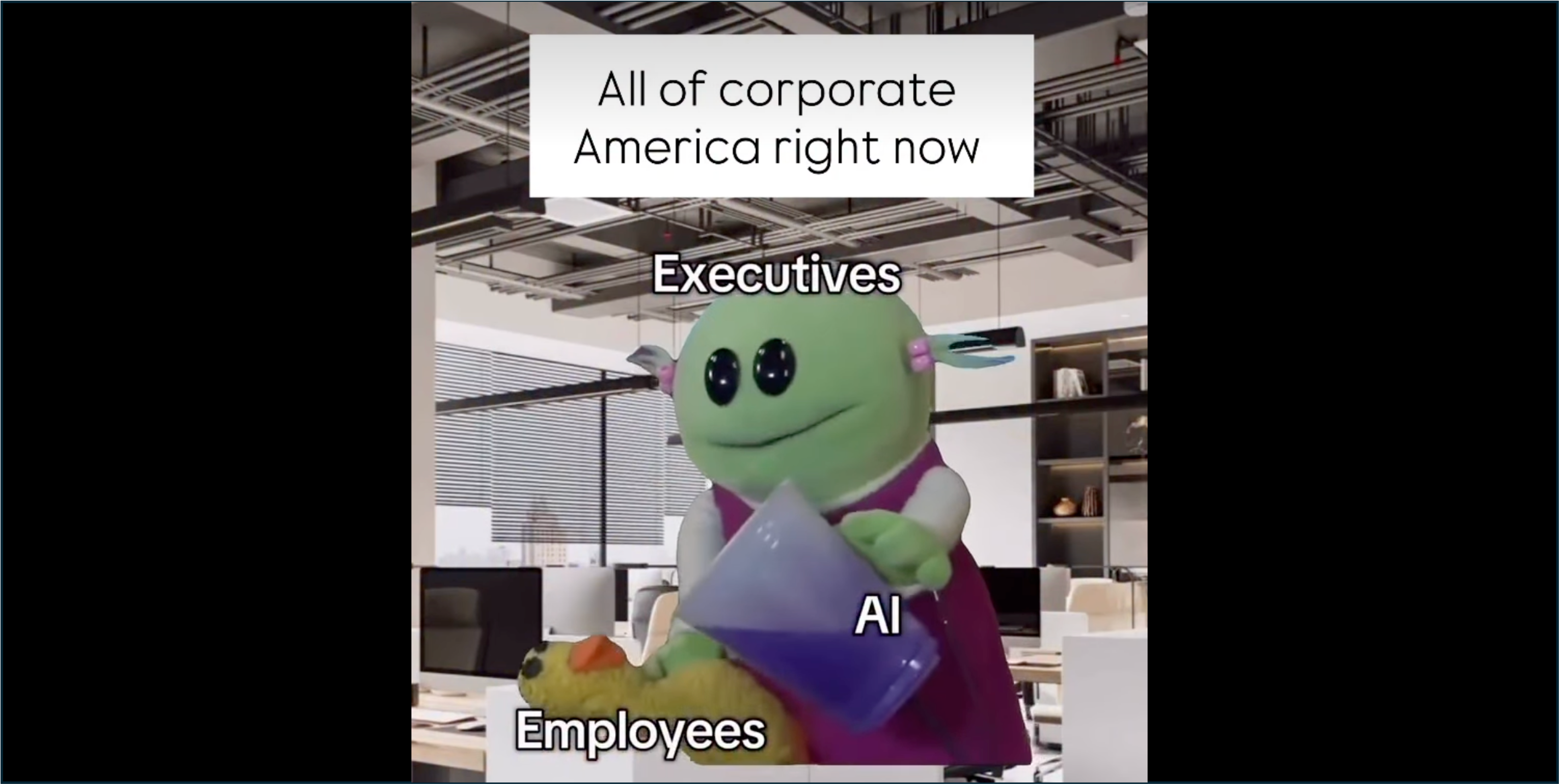
That was the memo. Here is why I’m sharing it publicly.
I’ve talked to dozens of founders and leaders over the past few months who are struggling with the same question: how do I get my team to actually adopt AI without resorting to threats or empty cheerleading? The answer, for us, was to make it personal. Stop talking about what AI means for the company’s bottom line. Start talking about what it means for each person’s career, their earning potential, their relevance in a market that is moving very fast.
The companies that threaten employees into adoption will get compliance. The companies that invest in their employees will get transformation. That investment pays back 10x because people who feel ownership over their own growth, and see their company supporting them in that journey, bring a completely different energy to the work.
If any of these principles or systems resonate, steal them and make them yours! Or send me an email to andrej@lumos.com or a message on LinkedIn [link] if you want to connect.
And if you read this and thought “I want to be at a company that actually operates this way,” we are hiring Alchemists at Lumos who want to build the platform for this new era of humans and agents working together. Jobs are open here [link].
The Agentic era is here. Let’s ride the wave vs. watch it from the shore.